



Locks are the best way to secure a door. But if a lock fails, the door doesn’t lock, or you don’t trust the lock situation in an apartment or hotel, you can take steps to make sure the door and home are safe. Even if the exterior door has a lock, additional security can help reinforce the sliding patio door, and locking your bedroom door can prevent your college roommate from sneaking in.
While the best fix is often to install, remove, repair or replace a lock, we also know some clever DIY hacks for how to lock a door without a lock. The following are quick, temporary solutions that can help you get a good night’s sleep without worrying about your safety.
1. Use a door stop.
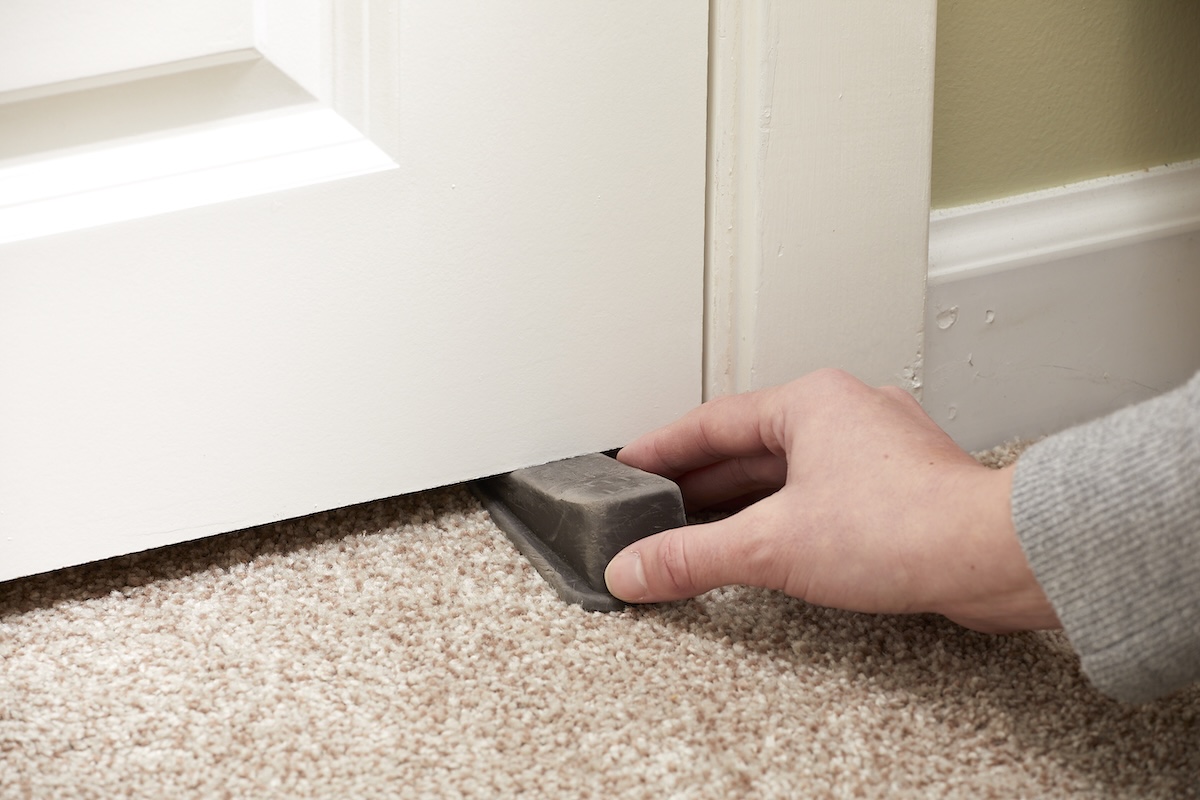
Door stops are commonly used to prevent doors from closing. But when you place a doorstop against the interior opening, it physically prevents someone from opening it, even if they turn the doorknob. It’s a simple, effective way to help secure a home when a door lock or latch breaks. For added security, look for a door stop with an alarm such as a siren or the sound of a barking dog. A nonslip bottom is essential to help resist pressure, especially for travel-sized doors.
However, a doorstop will not work on outward opening doors. And with enough force, an intruder can manage to bypass a doorstop. Consider securing an outward opening door with an additional method on this list for increased security.
2. Use the back of a chair as a barricade.
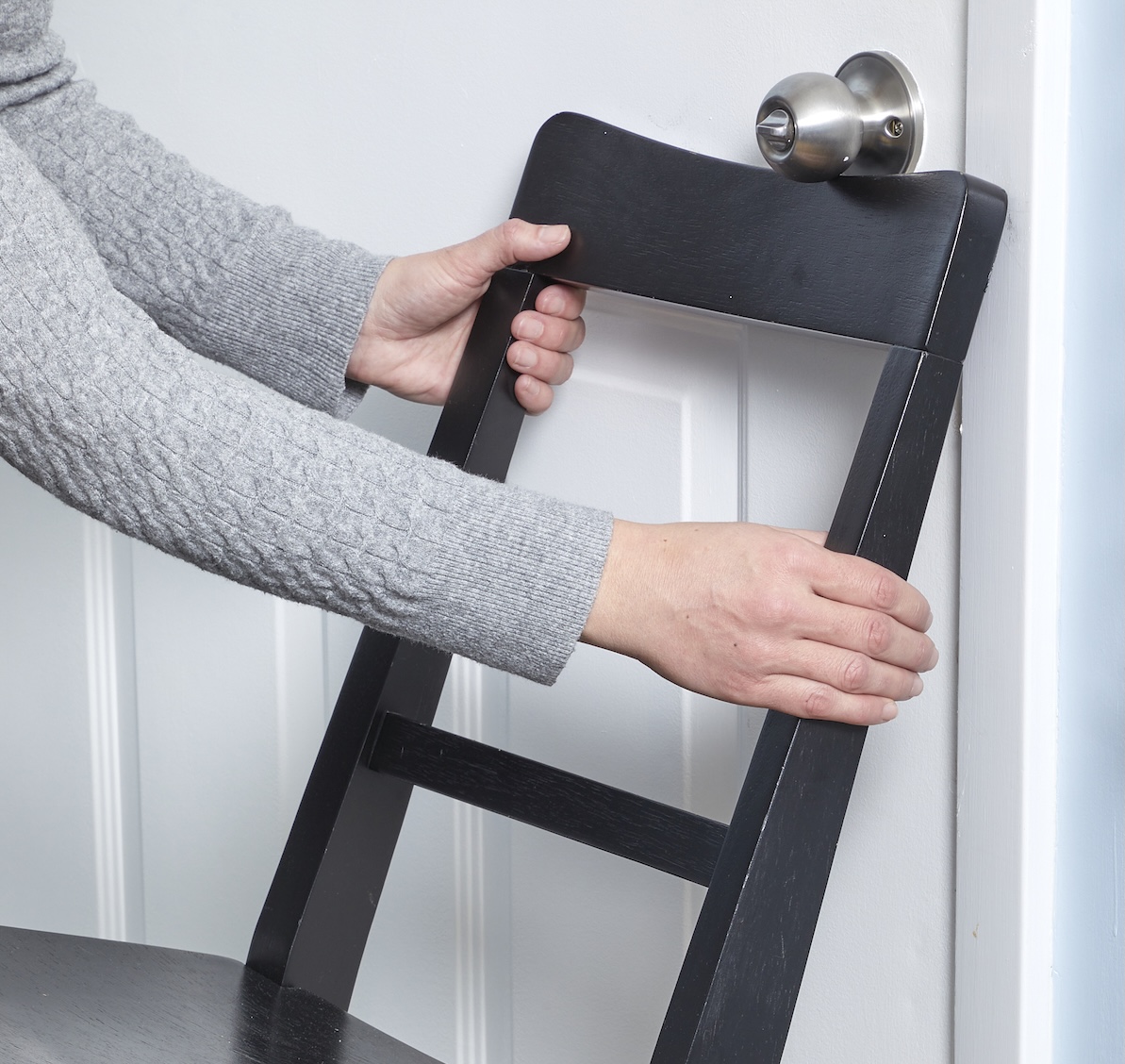
Installing a standard door lock is essential, but if you need to barricade a door using items around the house, look no further than your dining room: sturdy chairs can be a good choice for keeping the door closed because you can angle them so the chair’s feet are firmly planted against the ground. This creates pressure between the door and the floor along the back and legs of the chair, preventing the door from opening.
The back of the chair can also prevent lever-style door handles from opening downwards. If the door handle can also open the door with an upward turn, this method is not so useful. In this case, tie a belt or rope to the lever handle of the chair as shown in the next diagram to prevent it from opening downwards or upwards.
3. Tie a belt or rope around the handle.
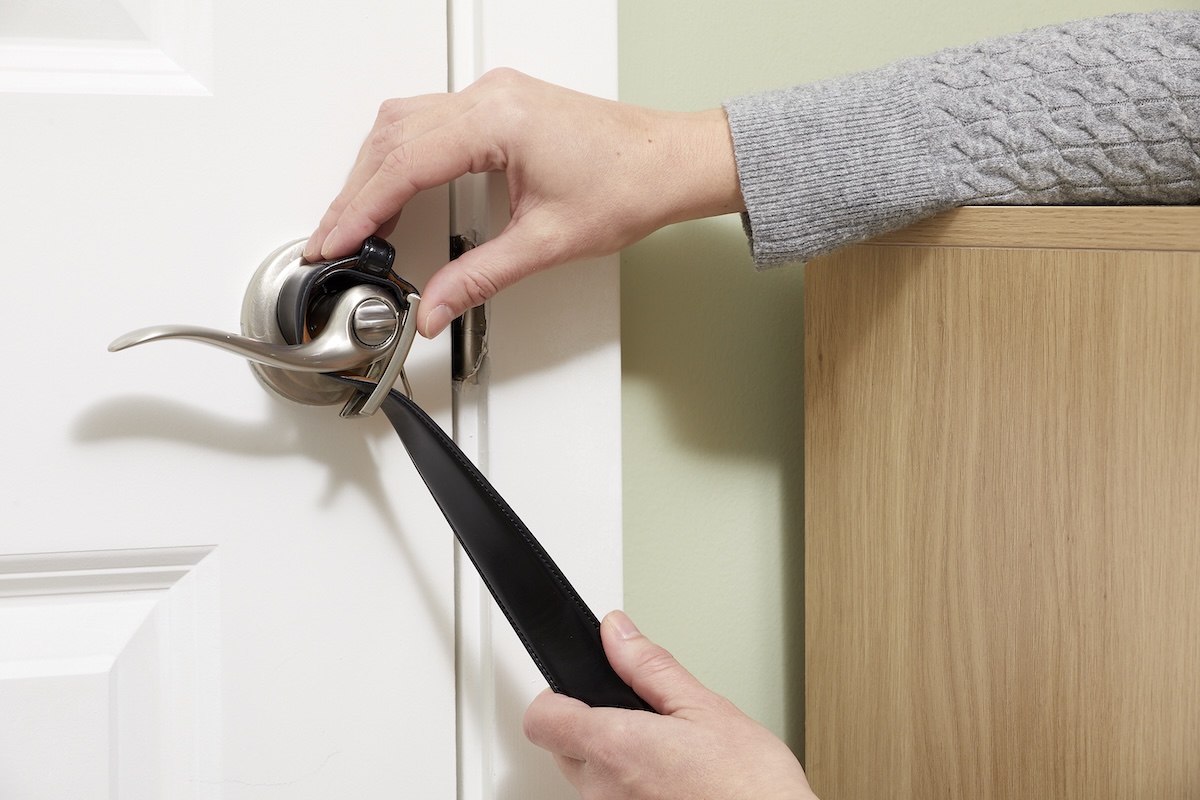
Lever-style door handles are easier to lock than doorknobs because a belt or rope can help prevent physical movement of the handle. Simply attach one end of the belt or rope to the handle and the other to a fixed object. Consider using two tethers to completely prevent movement when the handle can open up and down.
A belt or piece of rope is also a good option for securing an exterior opening because the tether can be attached to a heavy indoor object like a refrigerator or sofa. For French doors, wrap both handles with a fastener, preventing them from opening.
4. Insert the portable door lock.
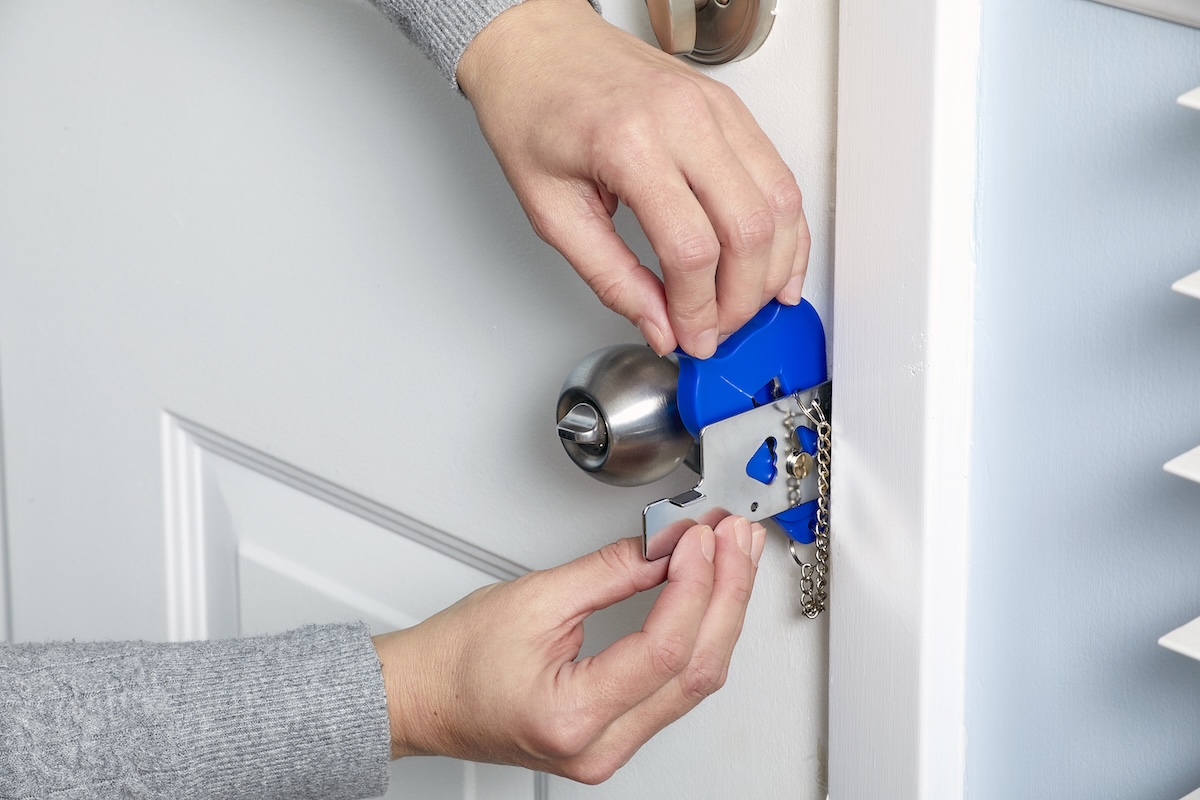
These helpful devices are perfect for renters and travelers who can’t install a more permanent solution. As the name suggests, an Adlock portable door lock is designed so that you can use and remove it as needed. Most consist of a piece of metal, sometimes referred to as a claw, that fits over the bolt or latch on an existing doorknob, and a lock that fits into the claw to prevent the door from being opened. These locks are less effective on outward opening doors.
5. Install the security bar.
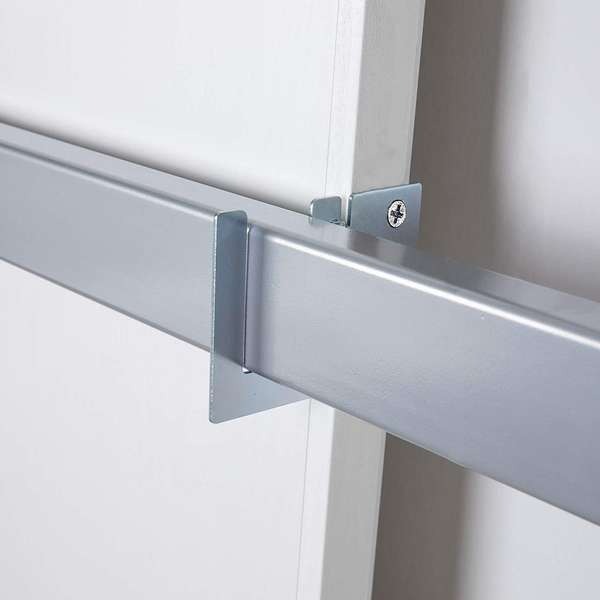
For better protection against significant force, such as an intruder trying to kick or break a door with their shoulder, security bars can help. Security bars or barricades consist of a pair of heavy-duty brackets that DIYers can fasten to a wall or door frame, depending on the product. A thick metal or wooden bar then sits in the bracket, blocking the entire width of the door.
You can lift this security bar up and out of the bracket when you need to use the door, and quickly put it back in the bracket with very little effort. Security bars are not effective in securing outward opening doors.
6. Insert the fork into the door latch.

Image: Tom Fenninga for Bob Villa Image: Tom Fenninga for Bob Villa Image: Tom Fenninga for Bob Villa


In a pinch, you can temporarily lock a door with a simple hook that opens from the inside. To secure the door, bend the tines of the fork so that the tips of the tines fit into the door latch and the rest of the fork rests comfortably in the gap between the door and the door frame when the door is closed. Open the door and take out the fork, then break the handle of the fork.
Place the fork head back into the door latch as before, making sure the bent tines are hooked securely onto the door latch, then close the door. After the door is closed, slide the fork handle through the tines, creating a horizontal barrier that prevents the door from opening inward.
7. Prepare a door jammer.
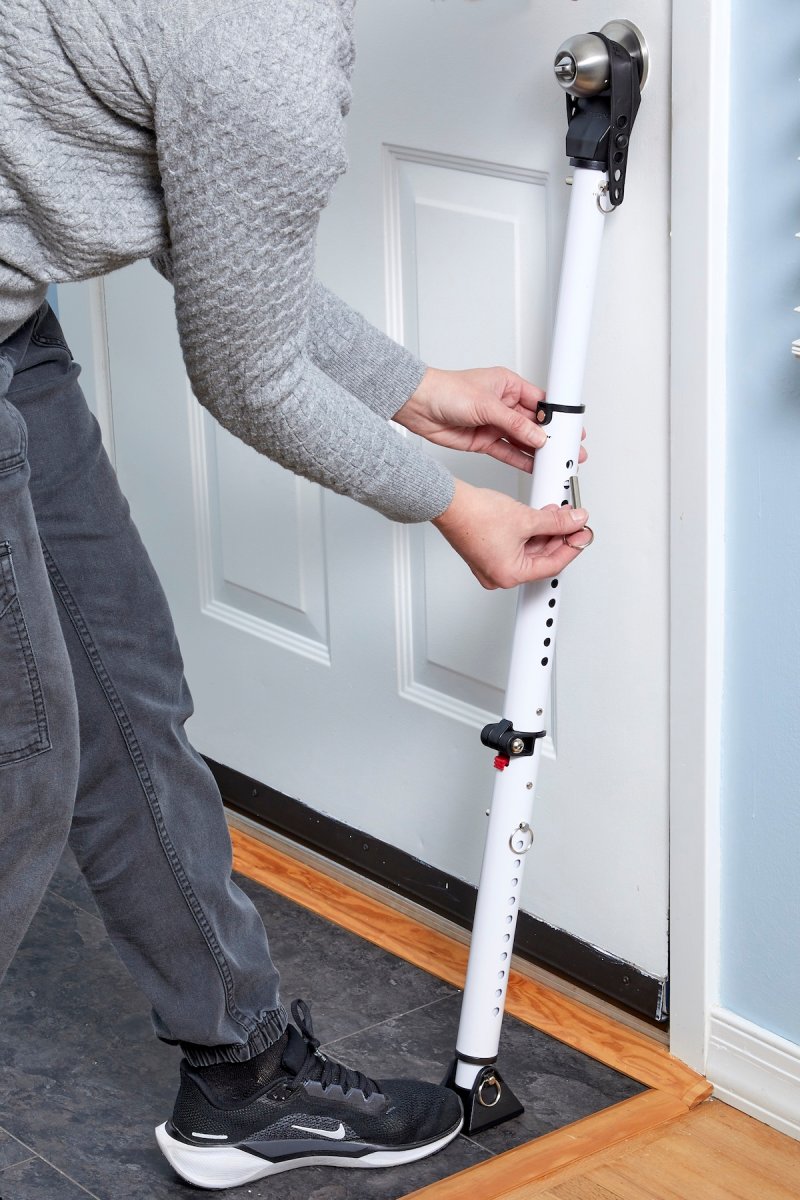
A door jammer is a particularly good solution for securing apartment doors. These tools usually consist of a height-adjustable security bar designed with a rounded end that fits easily under a doorknob or door handle. The other end has a padded foot that is designed to sit flat on the floor and resist sliding, creating a system that puts pressure on the floor if someone tries to open the door inward. For recommendations on the best solution for your situation, refer to our tested guide to the best door security bars.
8. Screw in the floor barricade.
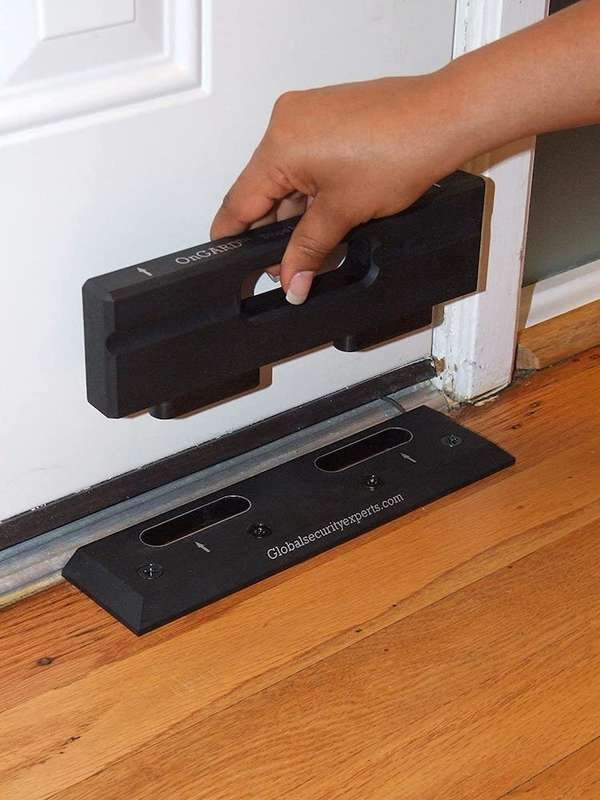
Floor barriers consist of two pieces: a base and a curve that can be fitted into or removed from the base. Install the floor barricade by inserting screws through the base and into the floor. Make sure when opening the door that it clears the top of the base before installing, so you can use the door when the brace is removed. When you want to secure the door, just insert the brace and it will prevent the door from opening inwards. If you’re allowed to install one in your home, a floor barricade is a good choice to prevent break-ins, but it’s not an option for renters and commuters.
9. Remove the door handle.
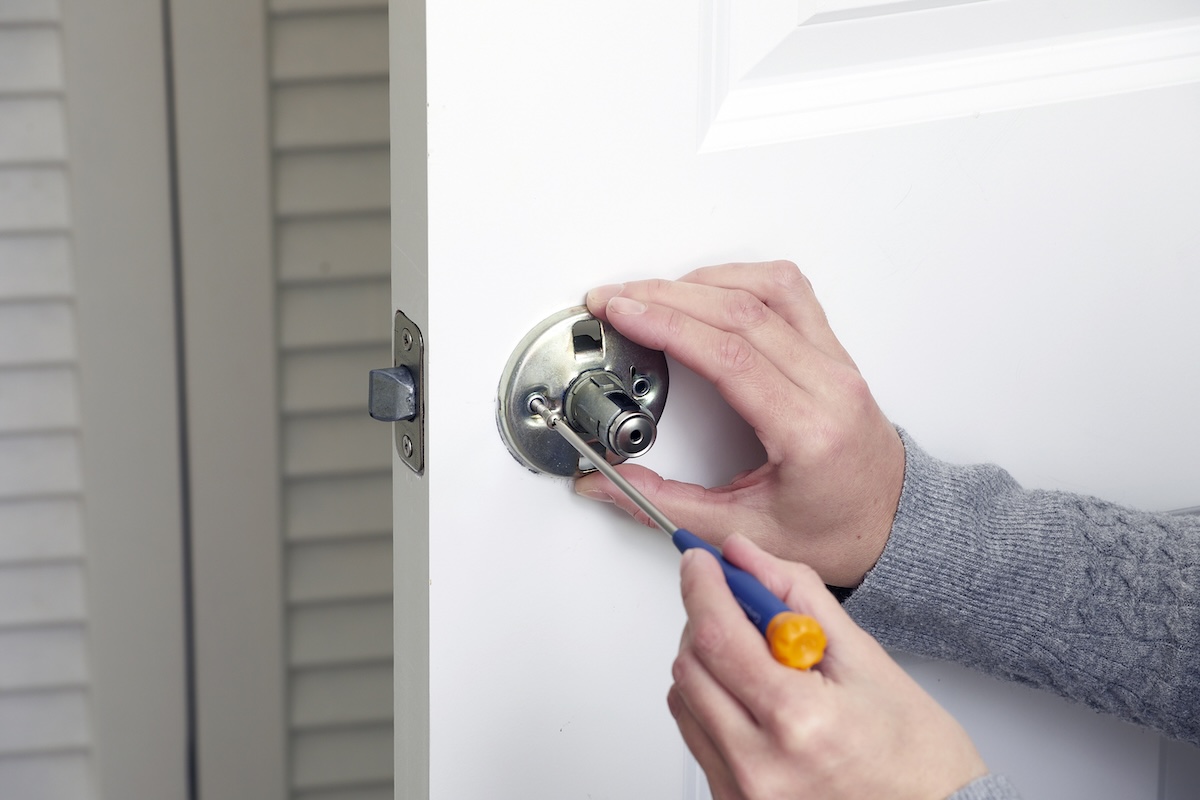
While it’s not the best option for securing a door, removing a doorknob or handle altogether presents a challenge for anyone trying to gain access to a home (or entryway). Without a handle, an intruder cannot open a door in the traditional sense, although anyone interested in using this method should also keep in mind that with enough effort and one or more makeshift tools, a novice can bend a door mechanism without a handle. It would be best to pair this option with another temporary door lock, such as a door stop, or even a barricade.
10. Mount a strike plate lock.
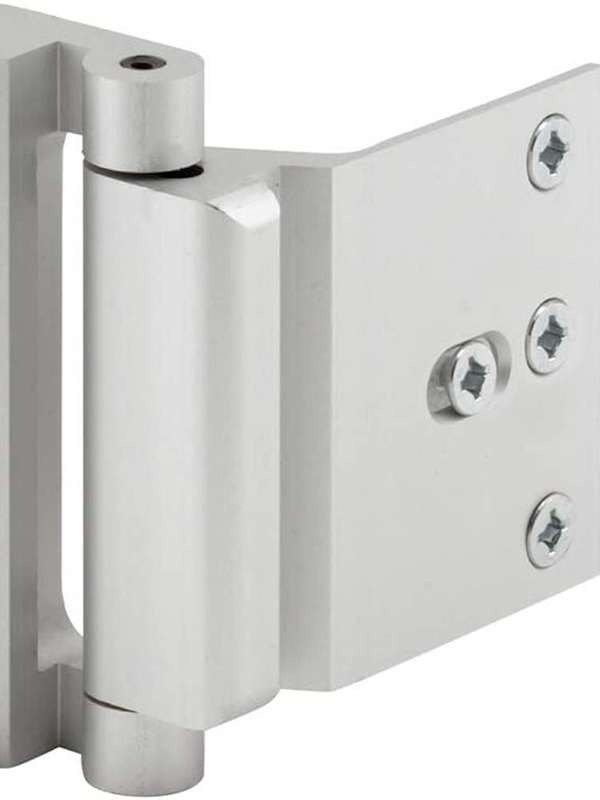
A strike plate lock is a small device that a door can mount to the door frame. It works like a standard door chain except that the strike plate lock has a metal loop that slides over the door handle to prevent the door from being opened. This method is much more secure than relying on a set of screws on the back of the door to secure the door against break-in. Also, users can install a strike plate lock using the existing strike plate screw holes to prevent further damage to the door frame. Or keep the stroller high and out of reach of kids to keep it safe.
11. Install the security film and glass break sensor.
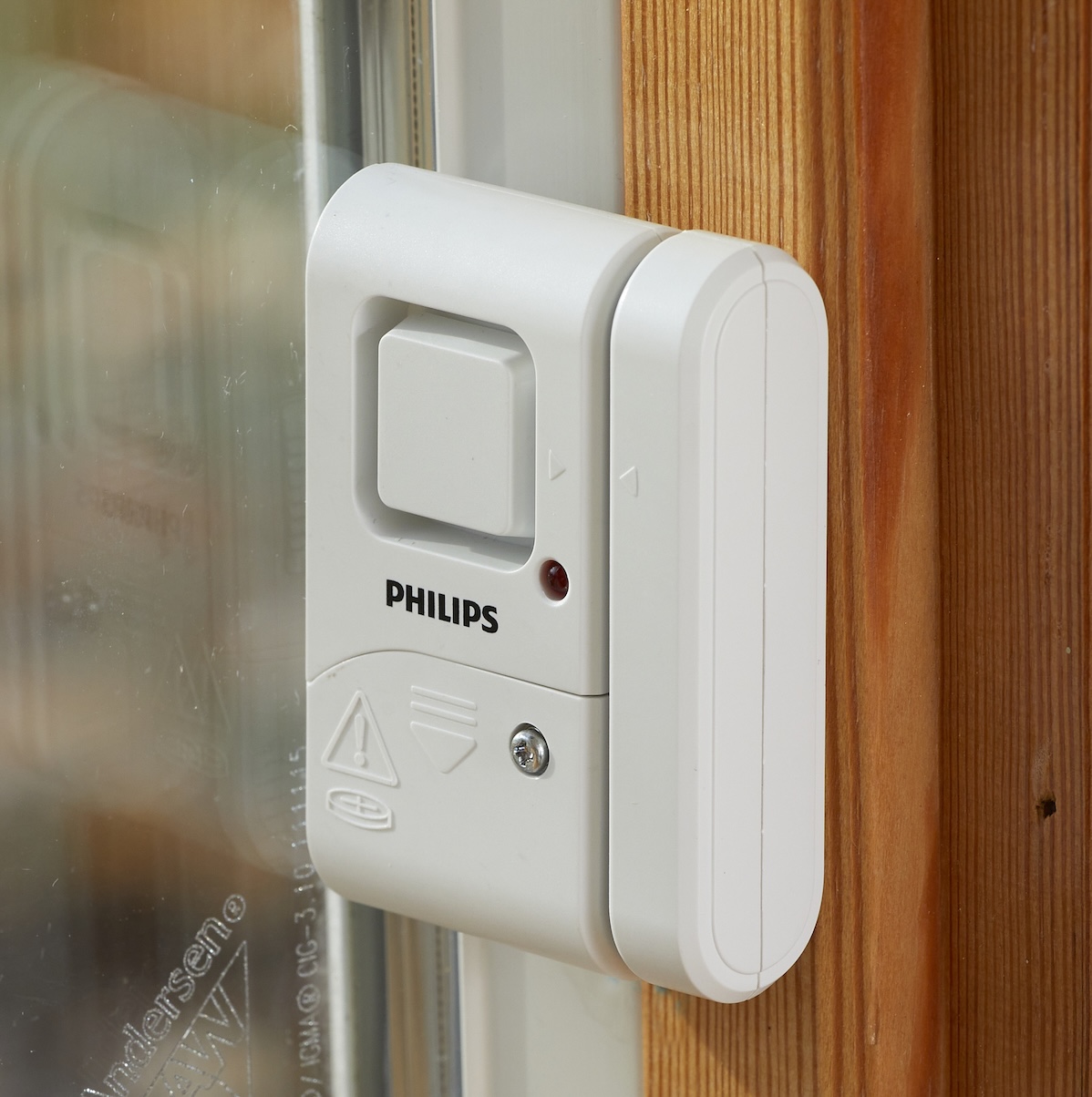
Not all doors are made with solid wood or metal, so it’s important to consider how to prevent someone from simply shattering the glass to access the doorknob or lock. A great way to increase the security of your front door with adjacent glass panels or glass doors is to apply security film to the door. The film will reinforce the glass and hold the shards together if it shatters.
However, with enough time and effort, a potential intruder may still be able to break through the film, so combine this setup with a glass break sensor that will detect when the glass is broken and then sound an alarm. This sudden alarm paired with the unexpected protection of security film will usually deter thieves and miscreants.
12. Block the sliding door with a broom handle or security bar.
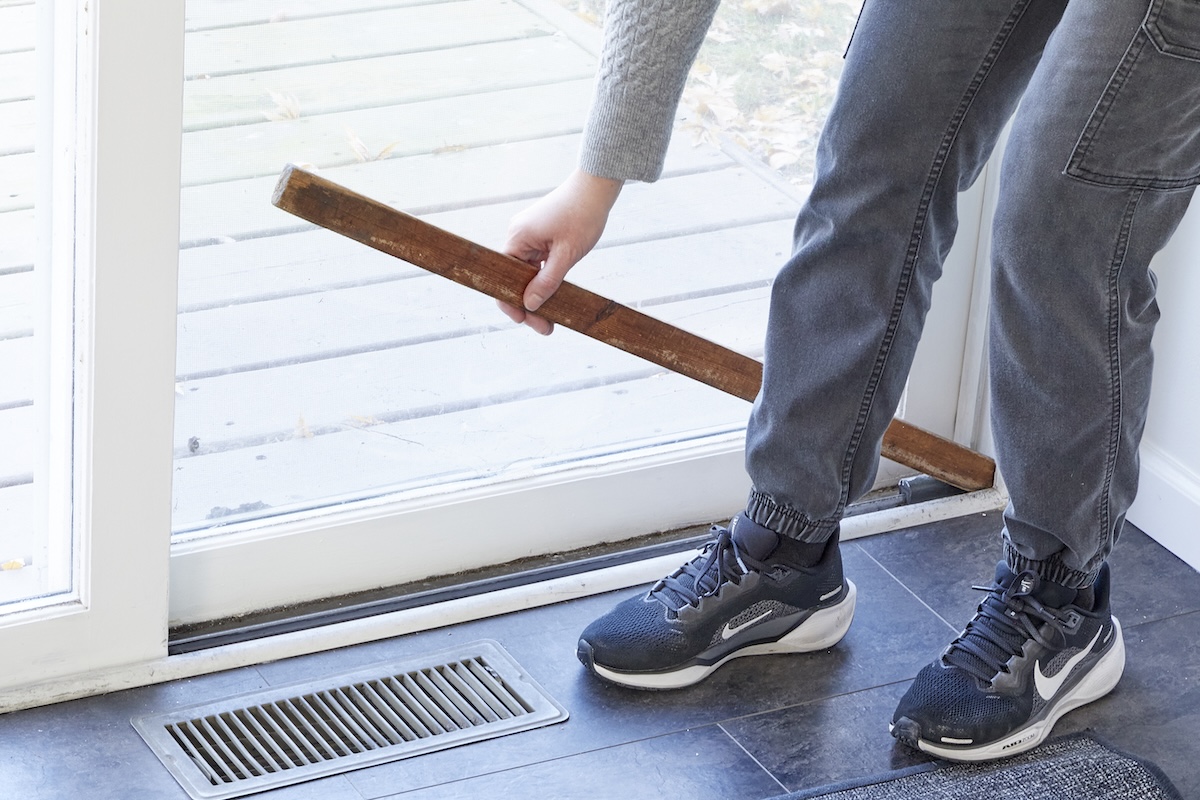
Sliding doors are often installed on the back or side of the house, where they open to the yard. Even if you use security film and glass break sensors, these measures are only effective if the door has a functional lock. If the lock on your sliding door isn’t working or might not be strong enough to stop a determined attacker, you should tie a security bar into the door frame or track.
Alternatively, you can use a sturdy household object such as a broom handle or a long piece of wood. A tall house can house a long house.
Meet the 2025 tools of the year
