



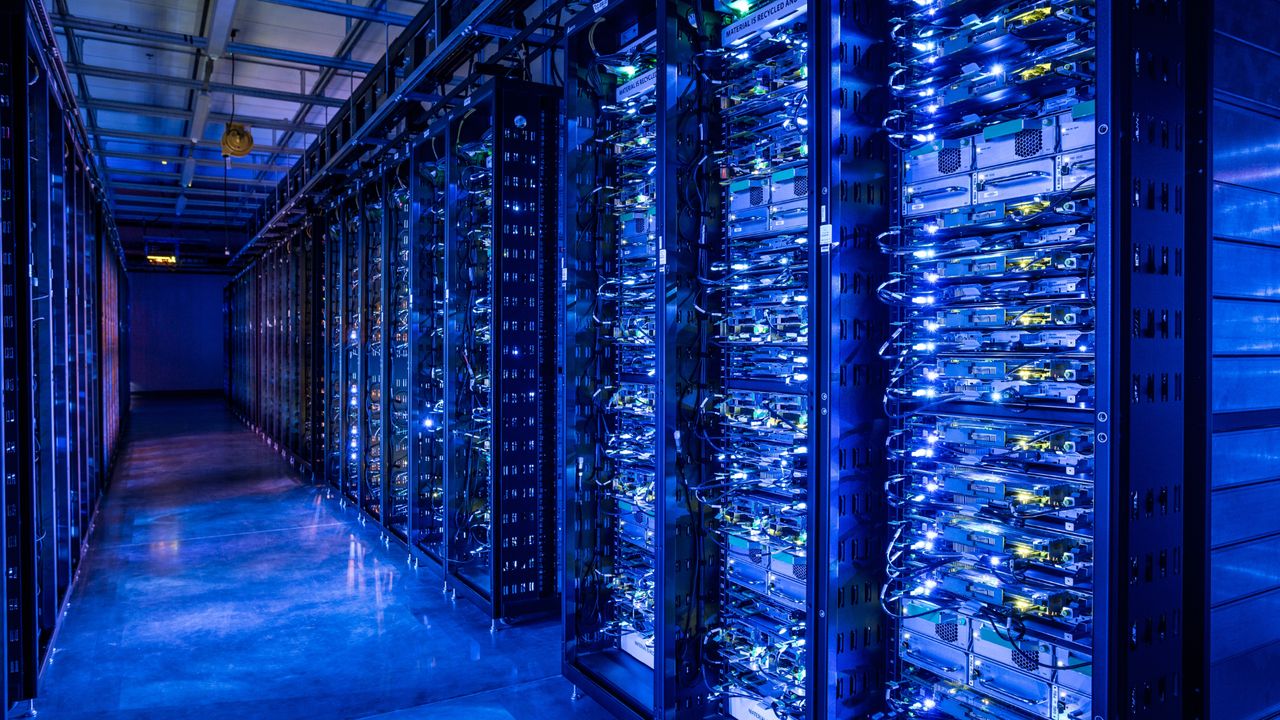
The world is racing to harness AI’s transformative potential, but this revolution comes with one reality: AI’s appetite for energy is huge and growing fast.
Building AI infrastructure efficiently and delivering on net-zero commitments is critical. For the UK, it’s not just an environmental imperative. It is an economic one.
Chief Growth Officer of Hitachi EMEA and Chief Executive Officer of Hitachi Zero Carbon.
I have spent my career at the intersection of technology, energy and government action for Net Zero Converge. I’ve always been drawn to the challenge and often influenced by the Silicon Valley ethos of “moving fast and breaking things” when it comes to unlocking game-changing innovations.
But for data centers, I’m seeing a new mantra: move fast, but don’t break anything.
Britain faces a perfect storm. A “rush” to create data center capacity, driven by the insurmountable computational demands of AI and the critical need for data autonomy. At the same time, the UK’s high energy costs already pose a significant barrier to competitiveness.
Building energy-hungry infrastructure on an expensive, carbon-intensive grid is economically unsustainable and threatens net-zero goals. We cannot afford to build infrastructure that locks us into operational costs and carbon debt.
Three pillars: a virtuous circle
The solution lies in realizing that performance, affordability and stability are not competing priorities, they are bound in a virtuous circle.
Efficiency means designing data centers that extract maximum computational value from every watt. This includes advanced cooling systems that minimize water and electricity use, predictive capacity management that prevents wasted energy from underutilized infrastructure, and improved hardware.
Efficiency flows directly from efficiency. Lower energy consumption means lower operational costs – when UK energy prices remain the highest in Europe.
Right-sizing infrastructure prevents waste of capital rather than over-delivering and ensures capacity is matched. This economic logic makes a compelling business case for green infrastructure, which benefits both the environment and bottom-line competitiveness.
When efficiency and affordability trade off, stability becomes a natural consequence. Lower energy demand means less pressure on the grid, lower carbon emissions, and infrastructure, contributing to national net zero goals.
The UK’s extensive wind capacity becomes a real competitive advantage when data centers are designed to run efficiently on renewable power.
A change of mindset
Achieving this virtuous circle for data centers calls for a mindset shift.
It calls for ‘engineering thinking’: a zero-rate-of-failure mindset where reliability and performance are designed in from the start, not later. Just as a failure in a power grid or transportation network is catastrophic, the same rigor should apply to AI’s data infrastructure.
This thinking is reflected in concrete innovations. For example, consider the emergence of advanced 800-volt direct current (VDC) power distribution systems, as a key step toward optimizing power supplies for high-performance AI.
Historically, data centers have relied on alternating current (AC), which requires multiple conversion steps from grid to rack, with each conversion introducing inherent energy losses that collectively waste substantial power.
However, advances in high-density computing environments are now demonstrating the utility of 800 VDC systems. By delivering direct current power near or directly to AI computing clusters, these systems dramatically reduce the number of conversions required.
This translates into significantly better performance, often cutting conversion losses significantly. Low conversion also means constant voltage, low heat generation, low cooling requirements, and a more compact power infrastructure footprint.
It is not extra. Extreme principles require a rethinking of infrastructure to sustainably support extreme AI power densities.
An Ecosystem Approach: Partnerships and Local Leadership
Strategic partnerships accelerate this transformation. These collaborations, for example between technology providers and infrastructure experts, combine frontier AI with deep infrastructure expertise, translating innovation into scalable solutions.
These relationships ensure the evolution of infrastructure that supports the rapid development of AI, and avoids cycles of waste and redeployment.
Yet technology alone is not enough. While the central government sets high-level policy, local leadership plays an important role in sustainable data center development. UK mayors and local authorities can proactively create “energy hubs” with existing water and energy access (eg, ports) and reimagine them as strategic digital infrastructure.
Integrating data center development into sustainable urban projects ensures digital growth with local environmental and economic objectives, creating jobs and driving prosperity while meeting national climate commitments.
Building infrastructure that delivers on climate commitments
For too long, data center climate impact was ambiguous, with inconsistent energy consumption and carbon accounting. As AI accelerates, it must align with global climate and net zero commitments.
This means rigorous, transparent measurement of energy consumption and carbon emissions, with sustainability developed from scratch, not reworked as an afterthought.
The UK has unique advantages – offshore wind resources, strong governance, and growing data sovereignty demands.
By prioritizing efficiency, fostering partnerships, empowering local leaders, and ensuring transparency around climate impacts, the UK can build data centers that responsibly power AI while strengthening competitiveness and advancing net zero commitments.
It is imperative that engineering rigor and collaborative thinking improve our climate future, rather than undermine it, as AI advances.
We have demonstrated the best of green web hosting.
This article was produced as part of TechRadarPro’s Expert Insights channel where we feature the best and brightest minds in the technology industry today. The views expressed herein are those of the author and not necessarily those of Tekradarpro or Future PLC. If you are interested in finding out more here:
