



Since the 1920s, engineers and architects have touted geodesic dome homes as sustainable, affordable, and energy-efficient designs. Their spherical shape is formed by an interlocking network of triangles that distribute weight evenly across the roof and into the space. “A circle takes up the least amount of surface area to cover a given volume,” says Travis Larson of Bagley, Minnesota, who built his geodesic dome home with his wife in 1980 and is retired after years in the construction business.
With 30 percent less surface structure in a dome than a typical rectangular house, “there’s also 30 percent less wall to lose heat,” Larson explains. But while energy savings and alternative living may have been the draw of the 1970s and ’80s, dome homes have many advantages. Tessa Hill and her husband, Dennis Johnson, owners of Natural Spaces in North Branch, Minnesota, have been designing and fabricating dome homes for more than 50 years. Hill attributes some of the resurgence in popularity of dome homes to the fact that “stability and flexibility in extreme weather have become increasingly important to today’s homeowners.”
Modern dome homes are sturdy and weatherproof, and there are many floor plans and size options available. The benefits of geodesic domes for homes, cabins, and even glamping structures are obvious, but I still had some questions about the logistics of dome building and the cost of living in a geodesic dome home.
1. Why would you use triangles to build a house?
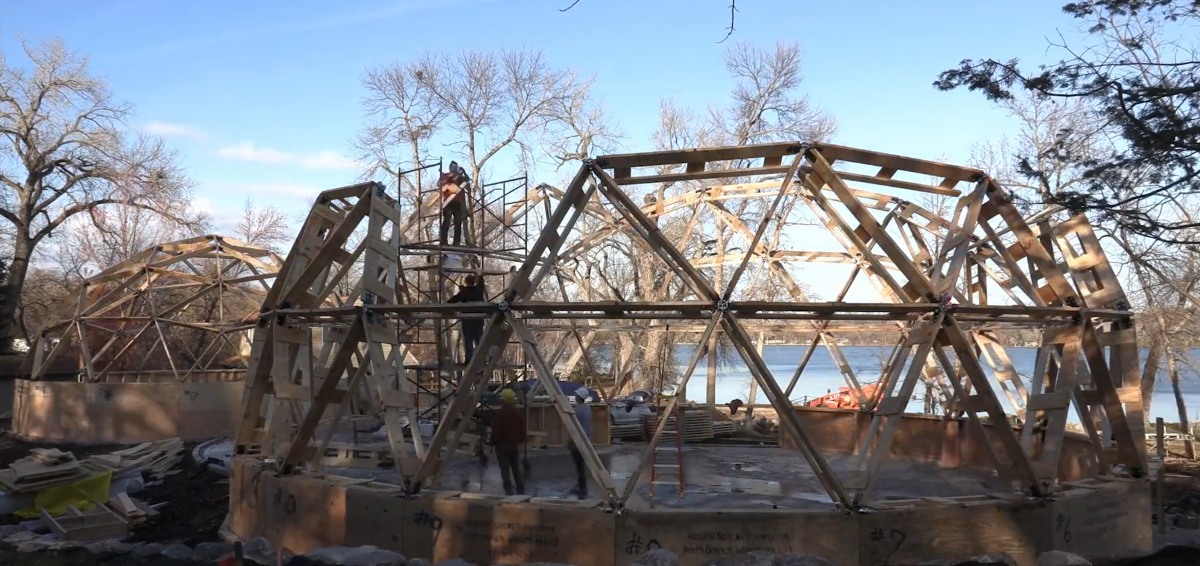
Although the material has been stronger and lighter since the 1920s, the essential strength of the triangle has not changed. Triangles are twice as strong as rectangles. The geodesic dome combines the strength of a triangle with the shape of a circle for added rigidity. “The geometry distributes the load evenly, making the dome exceptionally resistant to high winds, heavy snow loads and seismic forces,” says Hill.
Larson says he built most of the domes in which he “installed 16-inch dome walls and struts.” Natural Spaces has learned how to create 15- to 21-inch widths. Thicker walls offer more room for insulation, improving the dome’s energy efficiency. Geodesic dome homes typically start with a foundation (gravel or concrete) and a hub and truss framework to form the perimeter.
Less permanent options, such as dome tents and glamping domes, can even sit directly on the ground and low-cost geodesic domes are home options. “Our glamping domes use a traditional geodesic design with a metal skeleton frame and durable outer covering,” says Pelon Sains, owner of El Mystic Ranch in Nogal, New Mexico.
2. How can I build a dome house if I don’t remember high school geometry?
The geometry skills required to design a geodesic polyhedron framework make my head spin. Fortunately, you don’t have to do the math yourself—you can just get a dome house kit. Natural Places and other geodesic home manufacturers and designers offer plans or kits in different dome diameters and floor plans, as well as different models. You can also customize content and features such as window placement and size.
“You can get a complete kit that comes with the foundation, floor framing, and dome system (windows, the whole thing),” Larson says. And even though everything needs to fit into the geometry of the dome, Larson has tricks to pull it all together, like using the triangular panel as a guide to cut the insulation to fit.
3. How much does it cost to build a geodesic dome house?
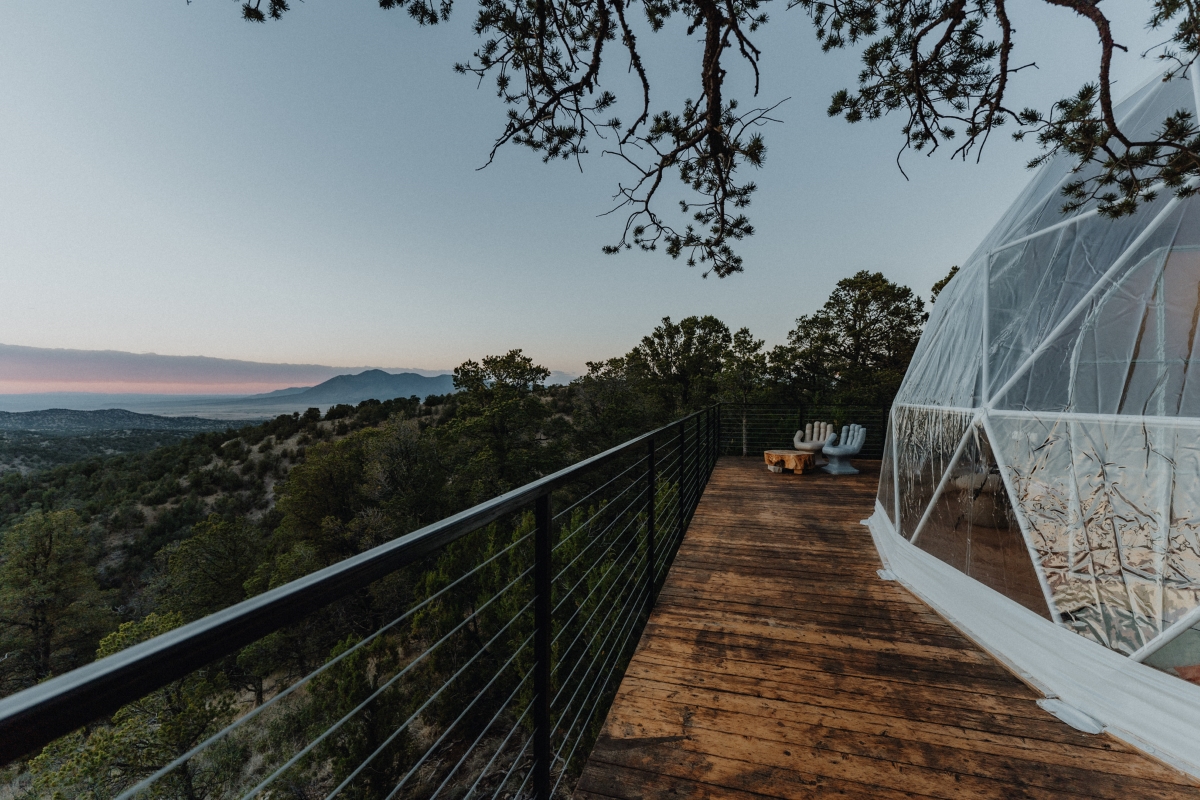
Geodesic dome home prices vary depending on size, materials and degree of customization. Competent DIYers can save on doing most of the work themselves. Ordering prefabricated dome houses and simple materials also helps keep the cost of building a geodesic dome down. Small dome tent kits with a PVC-coated cover can run as little as $200 to $1,200 to $4,000. Prices for more permanent kits vary, and buyers also need to factor in land costs, permitting costs, and utility costs running on the dome site. Natural Places offers a construction cost guide to help its clients estimate final costs. In 2025, these costs were less than $120 per square foot per square foot for owner-built domes built by a licensed contractor.
When Larson built the Domains, his crew would erect and ram the foundation on site, erect the framework and panels, and position the windows. He says he can easily “put up a center and strut or a small dome” in less than a day, while larger domes typically take 2 days. His clients will then find local contractors to finish the inside, saving money on out-of-town crew housing. Larsen typically returns to the dome roof a month or so later. Dome houses can cost more and require some expertise.
A permanent dome with steel or aluminum framing can last up to 50 years, while a tent-like polycarbonate dome lasts about 10 years.
4. What about interior walls and ceilings – do you have drywall walls that are not vertical?
Unless you’re building your dome as a greenhouse, you’ll probably want some solid walls for privacy inside dome homes. “Tongue and rustic wood interiors remain popular, especially for homeowners who appreciate a warm, natural aesthetic,” Hill says. In most cases, this wood paneling also comes in pre-built triangular sections. Larson says most dome owners choose spruce, pine or cedar.
Although you can use drywall for the inside of dome walls, “installation and long-term maintenance can be more difficult due to the geometry of this structure.” She suggests stained or painted plywood over the joints with fake board for a sleek look.
5. How do you place furniture against angled walls?
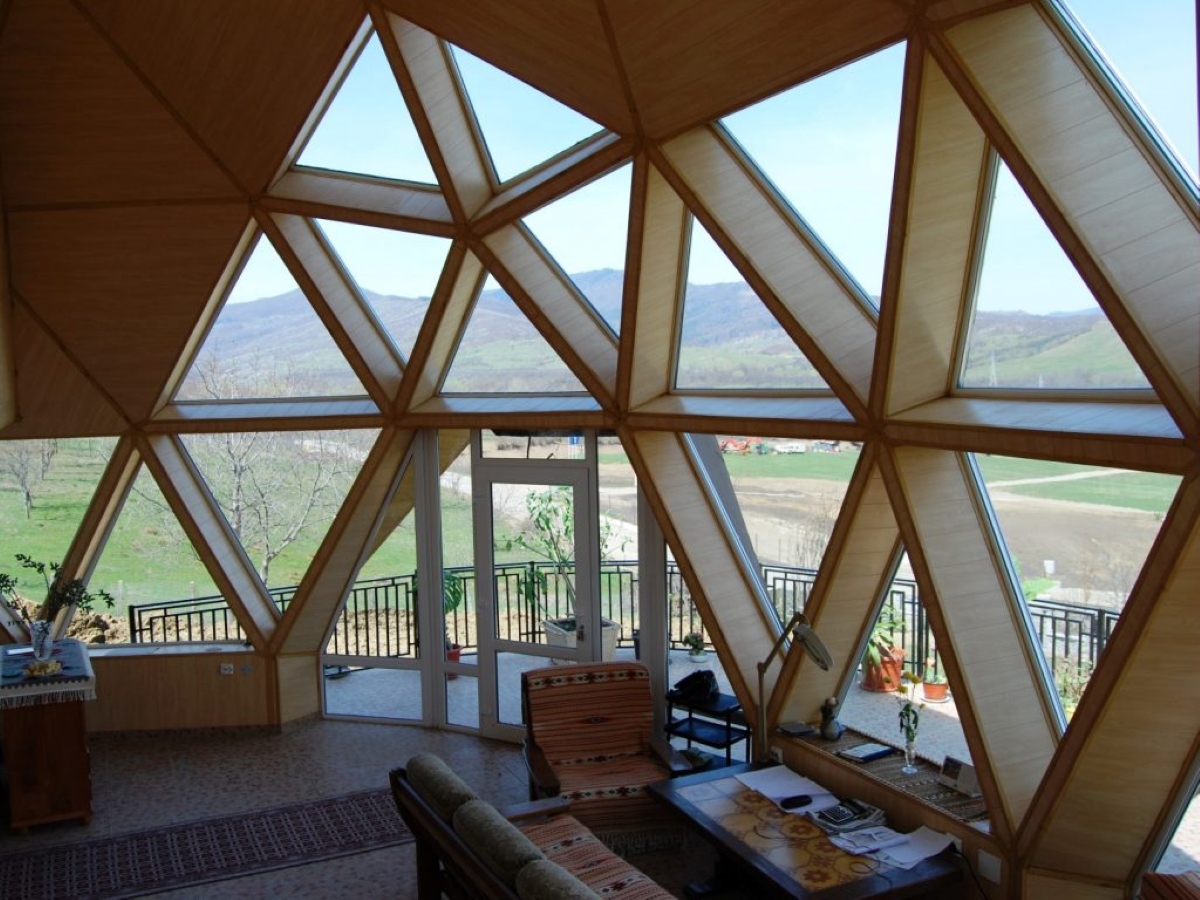
Each dome is unique, and many dome homes insist on retaining these natural curves for built-ins such as kitchen cabinets. Arranging furniture is “different, but not necessarily difficult,” Hill says. Larson adds: “Each wall is at least 8 feet long, and you can usually put sofas and tables against the dome if you want.”
“We didn’t have any problems,” says Saenz of El Mesco Ranch. The ranch worked with Monica Sains of Mozza Design in El Paso, Texas, who handled the layout and styling. In fact, dome architecture offers the ultimate open concept, with ample floor space to accommodate divided rooms, furniture and decor. (For example, I think I’d add a lot of plants.) “Once people adjust to thinking beyond straight walls, most find the space extremely adaptable and creative rather than limiting,” Hill adds.
6. How do you fit a rectangular door into a triangular opening?
I thought all the doors and windows in a geodesic dome home would have to be triangular, but dome companies have solutions for that too. For example, manufacturers offer risers 1 to 4 feet high to house patio windows, and the extension allows the builder to remove three or more triangles in the bottom row and create a frame that butts against the wall. “It will have operable windows, exterior doors and patio doors,” Larson says.
Larson also said the 2-story dome needs egress windows to meet building codes. For the second-story egress, “we’ll do away with a brace and frame the dormer,” he says. Although many dome windows are designed to fit into a triangular space, extended framing can accommodate operable windows large enough for egress.
7. Can a dome have interior walls?
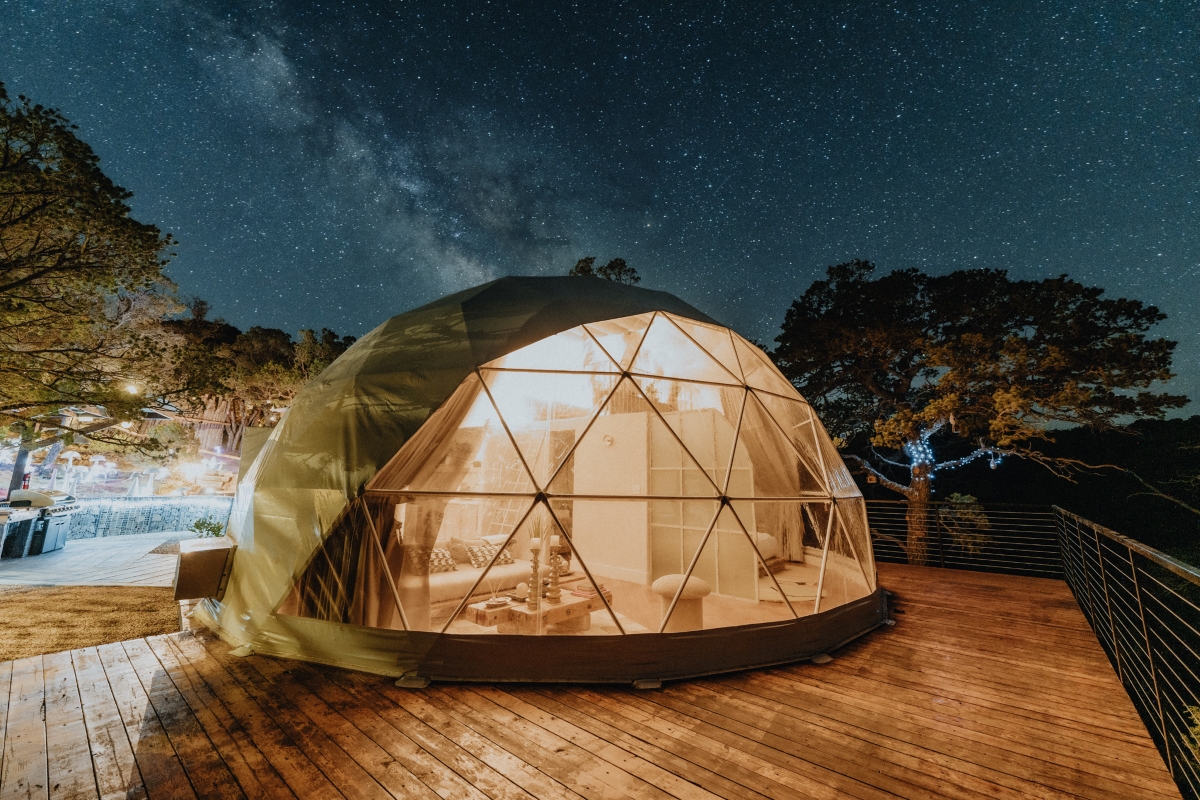
Open concepts are airy and beautiful, but there are limitations. For example, you still want privacy in the bathroom. “Because the dome is really self-supporting, you can do whatever you want,” Larson says. Adding 2×4 framed partition walls is common, and breaking up space is a matter of taste and design. “Many domes incorporate short vertical walls or interior partition walls,” Hill added. These can provide privacy, comfort and convenience without affecting openness and views.
For El Misco Ranch domes and even many permanent dome homes, maximizing views and comfort are key. “We were very mindful of the spacing and orientation to maintain privacy from neighboring units without sacrificing the landscape experience,” says Saenz of El Misco’s domes, all of which face north toward mountain views.
8. How do you hang window coverings and artwork?
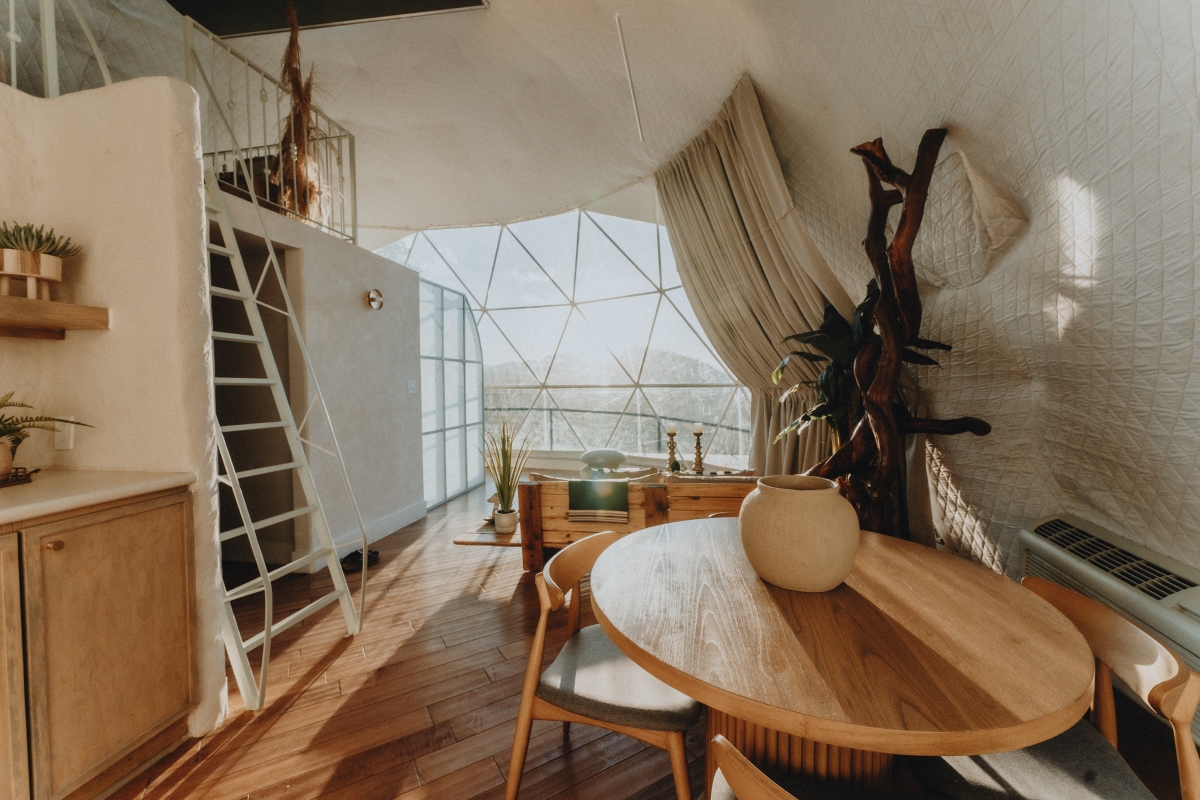
Larson notes that the sloping walls of dome houses don’t work well for hanging artwork. “But you have all the interior partition walls for that.” Hill often sees dome owners displaying art on interior walls or vertical sections of the dome home, “where it becomes a focal point.” He adds that while there are many creative solutions for window coverings, owners often choose to let light shine in instead of blocking it out.
9. What is the temperature inside the dome?
“I have a seven-window arrangement, side by side, and they all face south,” Larson says. So “you’ll get good heat in the winter, but bake in the summer.” Adding operable windows to the high or north side of the dome can help cool things down in the summer. He added that its dome does not require air conditioning and that the basement under the house is a good summer alternative on some hot days. Otherwise, the efficient temperature distribution and thick insulation of the sphere help keep the geodesic dome warm in winter and cool in summer.
El Masco Ranch’s glamping domains include an interior insulation lining that helps regulate year-round temperatures for summer and winter comfort.
10. Where do you hide plumbing, HVAC, and mechanical systems?
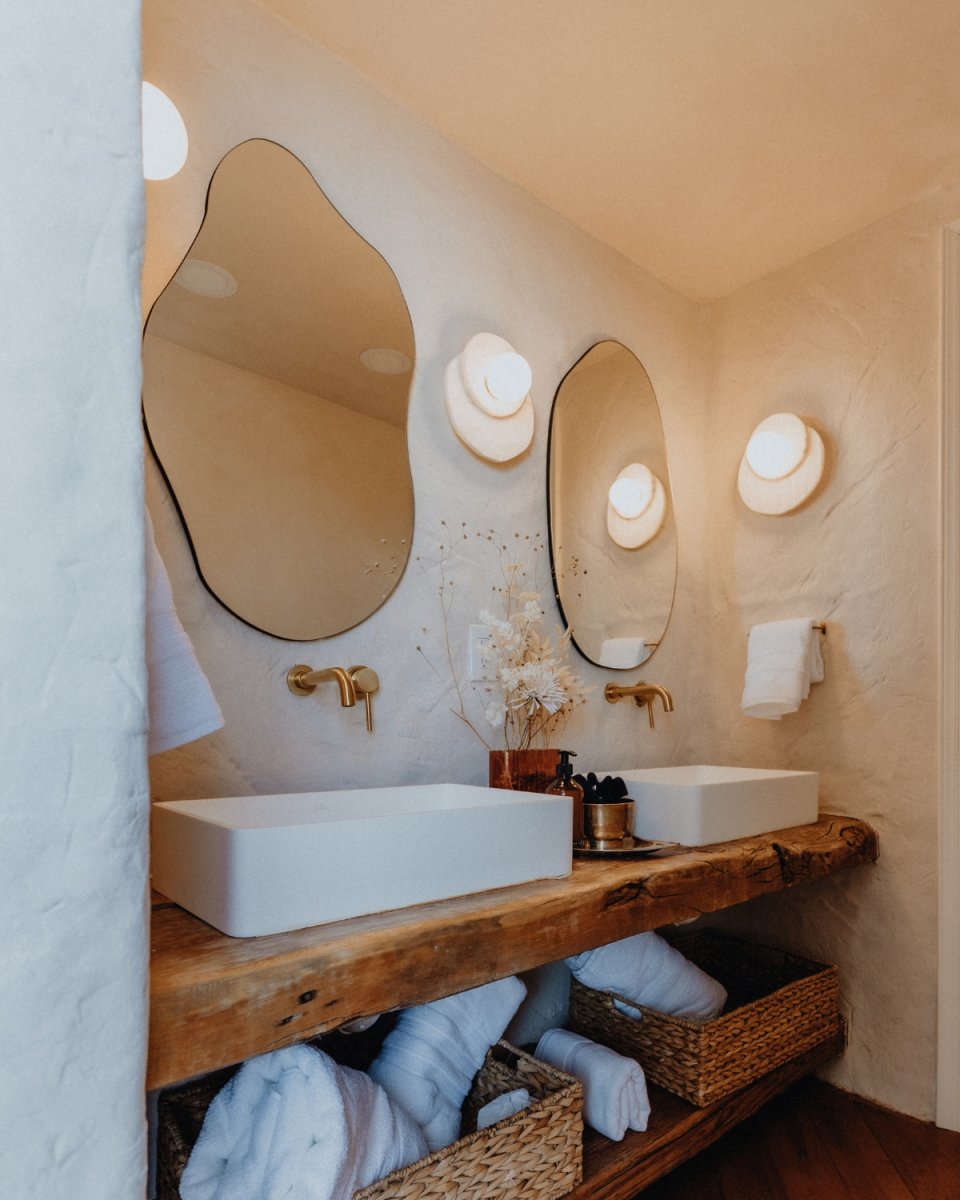
Any building in a place like northern Minnesota needs some form of heating. With its angular design and openness, a dome doesn’t offer much space for ductwork and vents. “Radiant floor heating works exceptionally well in dome homes. The heat rises, and the dome circulates the warm air efficiently,” Hill says.
Thicker walls also leave plenty of room for electricity to run, Larson says. Insulated wall cavities can house electrical or other mechanical runs, and partition walls are perfect for stacks and plumbing. Contractors can install heating or ductwork in floors or basements. Larson says his dome house has only one large cold air return, as its openness only requires a return to large, sealed rooms.
11. What is the best thing about living in a dome house?
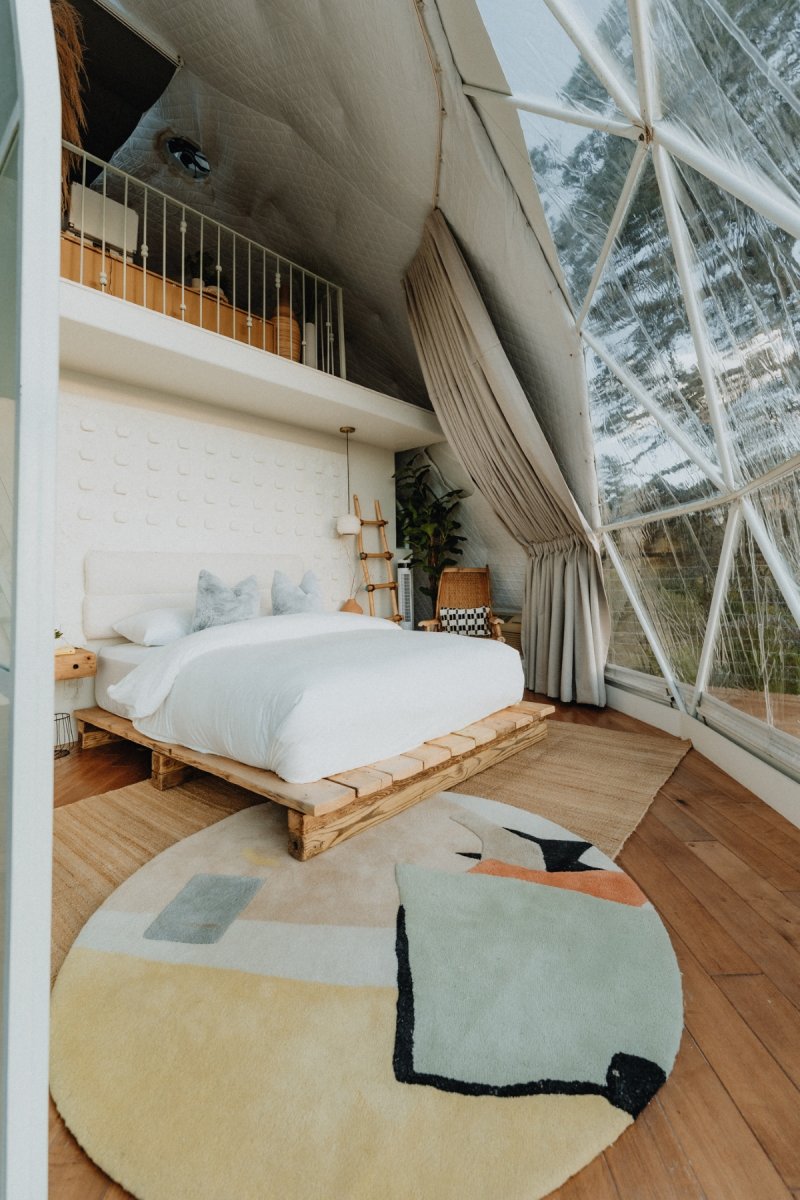
Larsen loves the openness of the dome living, tongue-and-groove paneling, and large triangular windows. He admits that his “kids were kind of outcasts” when they were younger and domes were rare. “They thought we were rich, but it really didn’t cost that much, and we built it ourselves,” he says.
Hill loves the dome’s combination of structural strength and indoor experience. “The dome spaces are open, calm and light-filled,” she says. “Many homeowners comment on what they describe as the dome’s spirit and sense of peace and connection.” Reviews of stays at the El Misco Ranch Dome use words like “magical,” “great views,” “immersion in nature,” and “coziness.” As for his dome home, Larson says, “It’s a fun place to live, and I really enjoy it.”
Homeowner’s Survival Kit
