



Personal injury attorneys can help you understand NYC public property laws and properly file a claim against the appropriate person, department or third party.
When you slip on gym kit left by the front door or trip home, you’re guilty of not putting things away properly after a workout session. But what happens when you get injured outside the home? You may not be quite sure who to point the finger at.
Sometimes you need expert help to figure out who was at fault. This is why many people who are injured in and around the city call a New York personal injury attorney to find out who is responsible so they can begin filing a claim.
What is the classification of public property in NYC?
First, what counts as public ownership? Determining where property ownership lines are is not always so clear-cut. If you’ve been involved in an accident in the city and aren’t sure whether it was on public property or not, a personal injury attorney can help clarify the situation for you.
As a rule, there are certain areas that can be easily identified as public property. In a city, sidewalks, roads, public transportation terminals, public parks, playgrounds, and public buildings, such as libraries and schools, are all considered public property. The New York City Housing Authority (NYCHA) is also on the list.
However, don’t be fooled into thinking that just because the public can enter an area that it’s public property. Shopping malls, grocery stores, restaurants, and cafes, although open to the public, are privately owned places. Furthermore, some sidewalks are not classified as public property, especially in gated communities. So, it’s easy to slip up on who owns what.
The most common injuries on public property.
Poorly maintained roads and sidewalks are major causes of trips and falls in urban areas. Uneven slabs and potholes, weathered by the elements and prone to wear and tear, can trap pedestrians. Seizures are very common, and while many people get away with a stubbed toe and a moment of embarrassment, others end up worse off with broken bones or deep cuts.
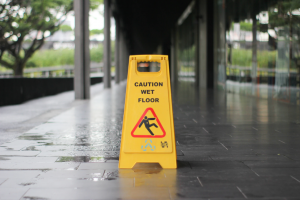
Slipping is another commonly reported injury. When public roads are not kept clean, slippery substances such as food and gas dripping from vehicles can become a hazard to pedestrians. In addition, adverse weather conditions, such as snow and ice, are a major cause of slips in public places.
Then, falling objects cause injuries. Fractured building structures and construction debris can cause severe head injuries and, in the worst case scenario, death. But who is to blame for everyday, unintentional injuries like trips, slips and falls? Let’s find out.
Source: YouTube
Who can be liable for injuries on public property?
If you’ve suffered an injury while living in or near NYC, you may be compensated. But who, if anyone, is responsible for this incident?
Government
Therefore, you suspect that the injury occurred on government property. However, you will still need to determine whether the area is a city or state.
In general, New York City is responsible for maintaining streets, sidewalks, local playgrounds, and public buildings such as schools and libraries. The state is responsible for buildings it owns, such as courts and offices, as well as bridges and highways.
Nearby property owners
If you trip while walking on a NYC sidewalk, it’s not always the government to blame. For example, if a nearby property owner has allowed a tree to grow out of control on their property, with roots sticking out of the sidewalk, they may be liable.
In fact, under NYC law, a property owner is required to maintain the condition of the sidewalk along their property. This includes repairing uneven concrete slabs and clearing snow. In this case, it is advisable to seek expert guidance if you are not sure who is responsible for an area of pavement.
Public Authorities
Injured in the subway? The MTA (Metropolitan Transport Authority) is responsible for injuries on subway platforms, stairways, bus terminals and depots. Poor or broken lighting, damaged escalators, and wet or cracked stairs are common causes of accidents in public transportation hubs.
Other public authorities that may be liable in the event of an injury include the Parks Department. Their role is to maintain walkways, walls, playgrounds and sports facilities in the park grounds.
Third Party Contractors
There is another option besides public and private residential responsibilities. Third-party contractors hired to work in or near a public place may be liable for injuries.
Although most contractors are guided by the strictest risk assessments and guidelines, accidents do happen. For example, falling debris can injure pedestrians. Also, inadequate signage may fail to alert pedestrians to potential hazards or turns, putting them at risk.
In seeking compensation, finding out who is responsible for the injury. Especially when it’s not always obvious. Personal injury attorneys can help you understand NYC public property laws and properly file a claim against the appropriate person, department or third party.
