



Samsung foldables have been around for years, but later this year, they may face some real competition from Apple. The company is reportedly developing three high-end products, including an iPhone that folds and unfolds. Rumors suggest a crease-free display, in-display sensors, and a price tag of at least $2,000 (but possibly $2,400). That’ll be an increase over Samsung’s $1,999 Galaxy Z Fold 7 and Google’s Pixel 10 Pro Fold, which start at $1,799.
According to Bloomberg’s Mark Grumman, the phone’s external display will be 5.5 inches. But open the phone, and you’ll see a 7.8-inch display. Think of it as a phone that turns into an iPad mini when opened. It will use a book-style design that opens horizontally, rather than a clamshell that folds and unfolds vertically like a flip phone.
PCMag-Recommended Foldable Phones


Other rumored features include four cameras—two on the front and two on the back, a 5,000mAh or more battery, and Touch ID instead of Face ID. Unsurprisingly, the phone will be eSIM-only, as with the previous several generations of regular iPhones.
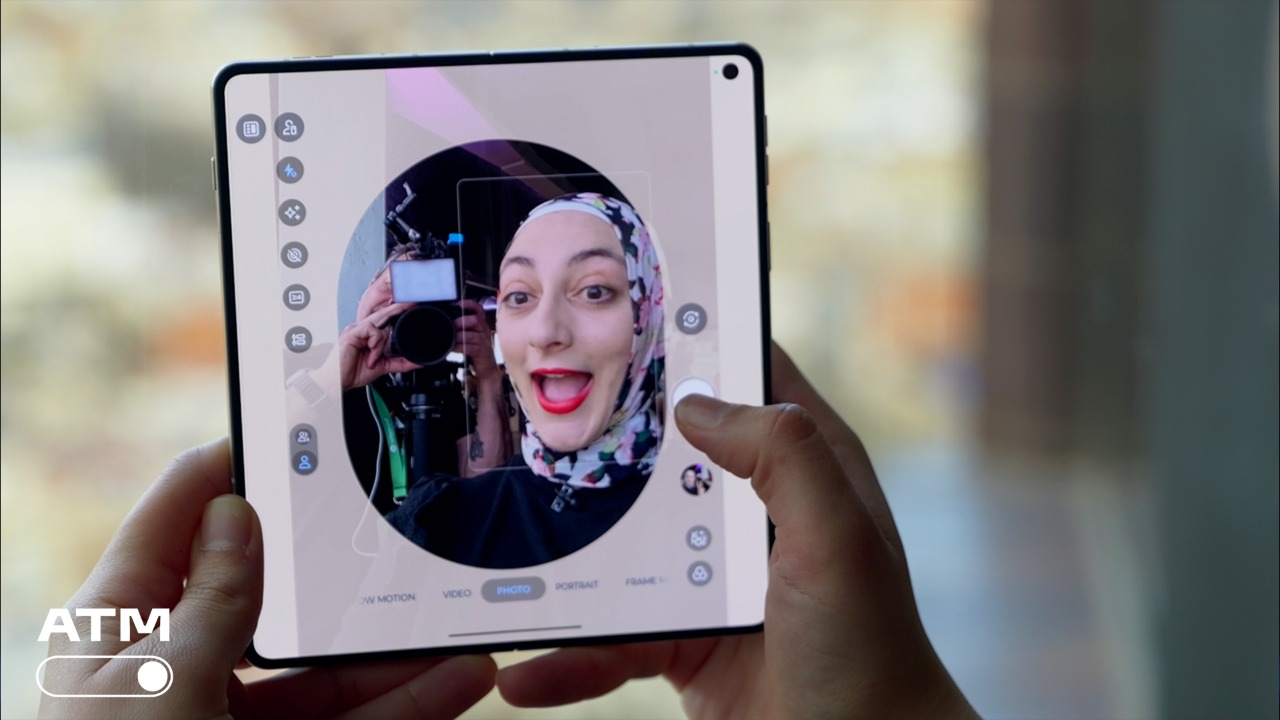

Motorola Razr Fold Early Look: Sleek Design to Take on Samsung
A foldable phone looks like an innovative and potentially helpful twist on the traditional smartphone. Even with large-screen phones like the iPhone Pro Max series, playing games, watching videos, or multitasking isn’t as satisfying as it is on a larger tablet. Apple is surely hoping that once the foldable iPhone arrives, plenty of customers will line up to buy it.
Yes, a foldable iPhone sounds interesting. As a tech journalist, I’m curious to see and try it out in stores. But I won’t be adding one to my shopping cart. And here are several reasons:
1. Too expensive
First and foremost is the price tag. As iPhone prices have gotten higher and higher over the years, I’ve had to shell out over $1,000 for the latest model and then some. Since I use the phone for both personal and professional reasons, I’ve been able to justify the pain in my wallet. I usually hold on to an iPhone for two years before replacing it, and then pass my previous model on to my wife. I can live with this arrangement.
But if the foldable iPhone really comes in at $2,000 and closer to $2,500, that’s where I’ll draw the line. I can’t see myself paying that much for a phone that I’ll probably replace in two or so years when newer, more advanced models come out. Of course, the cost may come down over time, but that’s another reason to wait for later versions.
2. New and untested
With flaws plaguing early foldable phones, Apple certainly made the smart decision to wait until it could fix the construction and other elements. But it will still be the first generation model. This means there are bound to be some features that don’t work as promised. Sure, I pick new, untested tech gadgets, so I can write about them. But I wouldn’t want to go through the trouble of being one of the first to compete with a foldable iPhone.
3. Durability
Foldable phones have had problems with screen creases. Not only are the creases visible, but some phones also have small cracks due to this. Apple is said to have solved the screen crease problem. But a phone that you keep folding and unfolding is still likely to get some wear. I would love to see a clean display without any physical obstructions.
4. Touch ID
A reported guess leaves me cold. I rely on Face ID for authentication and am quite happy with it. One of my pet peeves with my iPad Mini is its lack of Face ID. If the rumors about a foldable iPhone are true, I don’t want to go back to Touch ID on my main mobile device.
5. Foldability doesn’t thrill me
The idea of a foldable phone sounds good. And like I said, it has a practical purpose: you can work and play better on a bigger screen. But the foldability is not the selling point for me. Whether I’m at home or on the go, I usually have my iPad Pro and iPad mini nearby. If I want to watch a video, play a game, or read an e-book, I can always fire up one of them. And when I’m out and about, my iPhone is fine for the usual tasks—phone calls, email, texting, navigation, and checking apps. I don’t need a big screen for any of them.
Recommended by our editors
6. Less useful external screen
I believe Apple will develop an external screen on a foldable iPhone with most of the core iOS features. But I worry that the best will be saved for the internal screen. Does this mean you have to unlock the phone to do anything other than answer a call, send a text, or take a photo? This is difficult to answer at this time. And I imagine an external screen would be more than capable. But I still prefer a standard iPhone where I can do everything on a single screen.

Samsung Galaxy Z Flip 7 external screen (Credit: Eric Zeman/PCmag)
7. Slim construction
Finally, the foldable iPhone will be thinner when revealed. Think of all the components that have to be squeezed into that slim frame. The camera and battery are right off the bat. Will the camera be as good as the standard iPhone? Will the battery, even one that is supposed to be 5,000mAh, provide enough to charge through the day? Of course, these are unknowns for now, but they give me pause.
Just irresistible?
That’s how I feel right now, aside from the rumors about what the foldable iPhone looks like and how it will work. Apple may unveil the phone later this year, and I might consider it irresistible. But then I go back to my first reason, the price tag. A phone like this would have to be impressive enough that I’d be willing to shell out $2,000 or more for it. And I don’t see that happening.
Meanwhile, Apple released its low-cost iPhone 17e this week. Check out our full review.

Get our best stories!
A smart, bold take on the wireless world

By clicking Sign Up, you confirm that you are 16+ and that you agree to our Terms of Use and Privacy Policy.
Thanks for signing up!
Your membership has been confirmed. Keep an eye on your inbox!

About our expert

Lance Whitney
Collaborative
Experience
I’ve been working for PCMag since early 2016 writing tutorials, how-to pieces, and other articles on consumer technology. In addition to PCMag, I’ve written news and tutorials for various websites and publications, including CNET, ZDNet, TechRepublic, Macworld, PC World, Time, US News & World Report, and AARP magazine. I spent seven years writing breaking news for CNET as one of the site’s East Coast reporters. I have also written two books for Wiley & Sons.Windows 8: Five minutes at a time And Teach yourself LinkedIn visually..
I’ve used Windows, Office, and other Microsoft products for years so I’m familiar with the world. I also know Mac very well. I always work with iOS, iPadOS, watchOS and Android on my various mobile devices. And these days, I write a lot about AI, so it’s become another important area for me.
My wife always jokes about all the tech products around our house, but I manage to put them to good use for my articles. I love Lenovo computers, so I have Lenovo desktops and several laptops. I have three MacBooks and a Mac Mini. For my mobile life and work, I use an iPhone 16 Pro, iPad Pro, and iPad mini, as well as an Apple Watch. But since I write about Android, I have several Android phones and tablets. Like any techie, I have a cabinet full of cables, wires and various mysterious gadgets. And when it’s time to take a break from writing, I have an old Xbox 360 and a Nintendo Wii, both of which I use for exercise and fitness games.
Read full bio
